
How LLumin CMMS+ Helps You Comply with ISO 55001
Many organizations struggle under ISO 55001 and see how Llumin CMMS+ supports secure, auditable asset data and system control. For enterprises pursuing ISO 55001 asset information management, the shift from spreadsheets to comprehensive CMMS represents a fundamental improvement in how operational data supports asset lifecycle planning, risk-based asset management, and governance frameworks required by the standard.
This article examines how ISO 55001 compliance software transforms maintenance documentation through the asset management system for ISO 55001, ISO 55001 maintenance requirements, and ISO 55001 implementation support that turns day-to-day operational activity into defensible asset management evidence.
Why Meeting ISO 55001 Requires an Asset Management System
ISO 55001 defines requirements for establishing, implementing, maintaining, and improving an asset management system that aligns organizational objectives with asset performance, risk assessment, and lifecycle decision-making. The standard focuses on asset lifecycle planning through systematic approaches that connect asset management policy to measurable asset performance objectives across the organization.
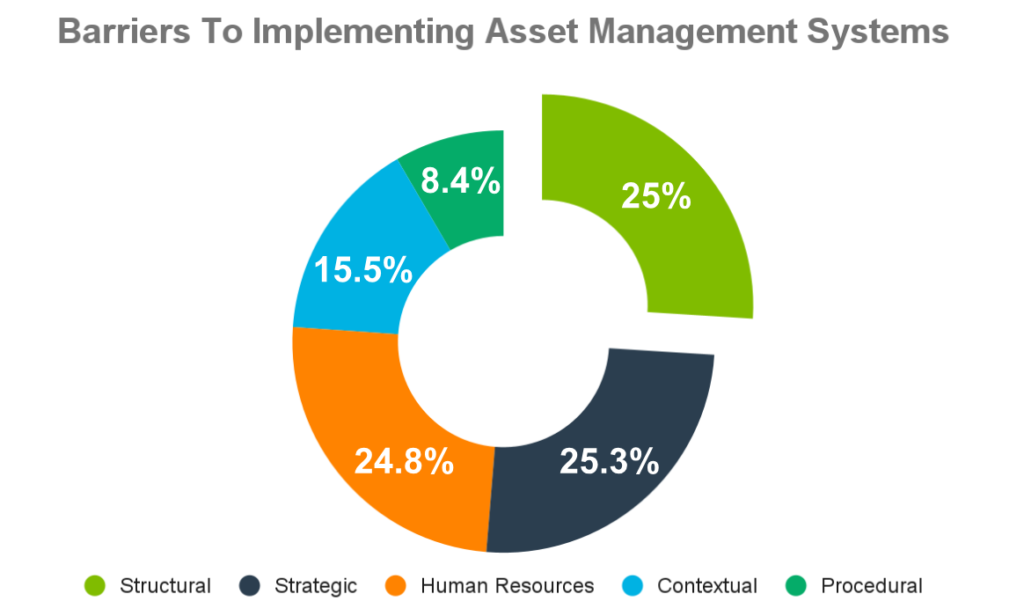
Compliance depends on consistent processes, controlled asset information, documented evidence, and performance monitoring through management system documentation that proves systematic control rather than reactive responses. Research shows that barriers to implementing asset management systems include a lack of leadership (7.6% global priority), inadequate resources, and poor organizational culture, suggesting that technology alone cannot achieve compliance without broader organizational commitment to systematic asset management.
Core ISO 55001 Requirements That Rely on Controlled Asset and Maintenance Information
Clause 7.5 – Information Requirements
Organizations must determine what asset information is required to support asset management objectives, ensure it is accurate, controlled, and available, and maintain it throughout the asset lifecycle through asset information requirements management.
| Information Requirement | ISO 55001 Expectation | Without CMMS | With CMMS |
|---|---|---|---|
| Asset register | Complete inventory with specifications | Excel files, incomplete data | Centralized database, standardized fields |
| Maintenance history | Full record of work performed | Paper logs, scattered emails | Digital records linked to assets |
| Condition data | Current state and trends | Anecdotal reports | Systematic inspections with timestamps |
| Performance metrics | Evidence of objective achievement | Manual calculations | Automated dashboards with audit trails |
Without centralized systems, asset information management requirements become administratively impossible to satisfy during internal audit readiness reviews or external certification audits.
Clause 8. – Operational Planning and Control
Maintenance activities must be planned, implemented, and controlled in line with asset management plans, including documented procedures and evidence of execution through maintenance planning and control systems.
The standard requires operational asset management that demonstrates control through documented procedures rather than relying on informal tribal knowledge or individual technician discretion.
Clause 8.2 – Management of Change
Changes to assets, maintenance strategies, or operating conditions must be assessed, documented and controlled to manage risk and unintended consequences through decision-making evidence.
Without systematic change documentation, organizations struggle to prove they manage rather than react to changes affecting asset-related risk controls and operational reliability.
Clause 8.3 – Outsourcing and Supplier Control
When maintenance is performed by third parties, organizations must retain control and evidence of performance, including records of completed work and compliance with requirements, through governance and accountability structures.
Organizations frequently outsource maintenance but fail to document contractor activities with the same rigor as internal work, creating compliance gaps during ISO 55001 audits focused on continuous improvement processes.
Clause 9.1 – Monitoring, Measurement, Analysis, and Evaluation
Asset and maintenance performance must be monitored using defined indicators, supported by reliable data rather than assumptions, through asset performance monitoring systems.
The ISO asset management framework demands that decisions be evidence-based, requiring maintenance data quality that scattered systems and manual processes cannot reliably provide.
Clause 9.2 and 9.3 – Internal Audit and Management Review
Organizations must be able to demonstrate, through documented evidence, that maintenance and asset management activities are effective and aligned with objectives during internal audit readiness reviews.
Without audit-ready documentation from structured systems, organizations spend weeks manually compiling evidence that CMMS platforms generate automatically through ISO 55001 maintenance requirements tracking.
How ISO 55001 Uses Asset Information to Support Decisions
ISO 55001 requires organizations to define the asset information needed and how it is controlled through asset information requirements planning, which connects operational data to strategic objectives. Decisions must be based on accurate, up-to-date asset condition, performance, and risk data through decision-making evidence that withstands audit scrutiny.
| Decision Type | Required Information | Information Source in CMMS |
|---|---|---|
| Asset replacement timing | Condition trends, failure rates, costs | Maintenance history, cost tracking |
| Maintenance strategy selection | Asset criticality, failure consequences | Asset hierarchy, risk assessments |
| Resource allocation | Workload distribution, backlog | Work order analytics, scheduling data |
| Performance target setting | Historical performance, benchmarks | KPI dashboards, trend reports |
Inconsistent records or disconnected systems undermine compliance because they weaken evidence, traceability, and system integrity required by the standard, due to gaps in management system documentation. Organizations implementing asset management systems face structural barriers, including a lack of qualified personnel (9.8% priority) and inadequate IT infrastructure, suggesting that technology selection and staff capability development are critical success factors.
Wondering How Llumin Cmms+ Supports ISO 55001 Asset Information Requirements, Operational Planning, And Audit Readiness?
Schedule a 30-minute demo to see:
- ✓ Centralized asset registers satisfying Clause 7.5
- ✓ Automated workflows proving operational control
- ✓ Pre-built audit reports organized by ISO clauses
- ✓ Real-time KPI dashboards for performance monitoring
- ✓ Complete audit trails with full accountability
How ISO 55001 Compliance Software Supports Asset Information Requirements
LLumin centralizes asset registers, hierarchies, and maintenance histories to support defined asset information needs through asset management policy implementation that creates a single source of truth for all asset-related data.
| ISO 55001 Information Need | LLumin CMMS+ Capability | Compliance Benefit |
|---|---|---|
| Asset identification | Unique asset IDs with hierarchical grouping | Complete traceability from component to facility |
| Asset specifications | Structured fields for make, model, specs | Standardized data supporting decisions |
| Lifecycle status | Acquisition date, condition, retirement tracking | Visibility into asset age and lifecycle stage |
| Maintenance history | All work orders are linked to specific assets | Complete record proving systematic care |
Structured work orders and schedules provide consistent evidence of maintenance planning and execution through operational planning and control documentation that demonstrates ISO compliance. Centralized asset data in LLumin gives IT teams control over access, structure, integrations, and data consistency across systems through governance and accountability frameworks required by the standard.
Risk-Based Maintenance and Lifecycle Planning
ISO 55001 expects maintenance strategies to reflect asset criticality and risk, not uniform schedules applied without consideration of operational impact. ISO 55001 compliance software helps organizations evaluate trade-offs between cost, performance, and risk over the asset lifecycle through risk-based asset management approaches.
| Risk-Based Approach | Traditional Approach | CMMS-Enabled Approach |
|---|---|---|
| Maintenance frequency | Same schedule for all similar assets | Adjusted based on criticality and condition |
| Resource prioritization | First-come, first-served work orders | Critical assets receive priority attention |
| Lifecycle decisions | Replace at a fixed age | Replace based on condition and total cost |
| Risk mitigation | Reactive responses to failures | Proactive interventions before failure |
LLumin CMMS+ enables teams to prioritize assets, track condition trends, and adjust maintenance plans based on real performance through asset lifecycle planning that aligns resources with risk reduction rather than arbitrary schedules.
Performance Monitoring and Continuous Improvement
ISO 55001 requires organizations to monitor asset performance and evaluate whether objectives are being met through asset performance objectives tracking and review. Performance indicators must be supported by reliable, system-governed data rather than assumptions through continuous improvement processes.
| Performance Area | Example KPIs | CMMS Measurement |
|---|---|---|
| Reliability | MTBF, MTTR, failure rates | Downtime tracking, failure analysis |
| Availability | Uptime %, planned vs unplanned downtime | Scheduled maintenance completion |
| Maintenance efficiency | PM compliance, backlog reduction | Work order completion metrics |
| Cost control | Maintenance cost per asset, cost trends | Labor and parts cost tracking |
Maintenance and asset KPIs tracked in LLumin provide measurable input into management reviews and improvement cycles required by Clause 9.3 through asset performance monitoring dashboards. Organizations that invest in maintenance programs decrease downtime by 44% while reducing defects by 54%, demonstrating substantial performance improvements achievable through systematic asset management supported by CMMS data.
Governance, Accountability and Audit Readiness
ISO 55001 audits also assess how asset information systems are controlled, secured, and maintained through IT governance frameworks. Organizations must show who is responsible for assets, maintenance, and approvals through governance and accountability documentation.
| Governance Element | ISO 5001 Requirement | LLumin CMMS+ Support |
|---|---|---|
| Role clarity | Defined responsibilities for assets | Asset ownership assignments in the system |
| Approval workflows | Documented authorization processes | Configurable approval routing |
| Data security | Controlled access to sensitive information | Role-based permissions and audit logs |
| System maintenance | IT ensures system availability and integrity | Reliable cloud architecture with backups |
LLumin CMMS+ supports role clarity, documented actions, and traceable records that simplify audits through internal audit readiness capabilities built into the platform architecture. The system maintains complete audit trails showing who accessed what data, when changes occurred, and what approvals were granted through ISO asset management framework documentation.
Achieve ISO 55001 Compliance with LLumin CMMS+
ISO 55001 compliance software provides disciplined asset management practices supported by reliable data through systematic operational asset management rather than reactive crisis response. A CMMS does not replace the standard, but it provides the structure needed to operate it consistently through ISO 55001 implementation support.
| LLumin CMMS+ Capability | ISO 5501 Clause Supported | Compliance Value |
|---|---|---|
| Centralized asset register | 7.5 Information requirements | Single source of truth for asset data |
| Automated PM scheduling | 8.1 Operational planning | Systematic maintenance execution |
| Change documentation | 8.2 Management of change | Risk-assessed modifications |
| Contractor work orders | 8.3 Outsourcing control | Accountability for external work |
| KPI dashboards | 9.1 Monitoring and measurement | Evidence-based performance tracking |
| Audit reports | 9.2/9.3 Audit and review | Rapid evidence compilation |
Book a demo to see how LLumin CMMS+ supports ISO 55001 compliance through structured asset data and maintenance control that turns operational activities into defensible documentation supporting certification and continuous improvement through the Asset Management System for ISO 55001, designed specifically for complex enterprise requirements.
Frequently Asked Questions
What does ISO 55001 require from maintenance teams?
ISO 55001 requires maintenance teams to follow planned, controlled processes that support asset management objectives, document all work activities with evidence of completion, manage changes to assets or maintenance strategies with risk assessments, coordinate outsourced maintenance with accountability for results, and monitor performance using defined indicators. The standard emphasizes operational planning and control through systematic maintenance planning and control rather than reactive responses, with particular focus on maintenance data quality and traceability.
Can a CMMS help achieve ISO 55001 certification?
A CMMS helps achieve ISO 55001 certification by providing the infrastructure needed to satisfy the standard’s asset information requirements, operational planning and control clauses, change management documentation, outsourcing oversight, and performance monitoring demands. Organizations implementing asset management systems face procedural barriers, including difficulties introducing new processes (2.5% priority) and increased bureaucracy (2.2% priority), suggesting that CMMS platforms must balance compliance rigor with operational usability. The CMMS creates audit-ready documentation automatically through ISO 55001 compliance software designed specifically for this purpose.
What asset data is required for ISO 55001 compliance?
ISO 55001 compliance requires asset identification and specifications, asset hierarchies showing relationships, condition and performance data, maintenance histories with complete work records, lifecycle information including acquisition and disposal dates, risk assessments and mitigation actions, and cost data supporting lifecycle decisions. This asset information must be accurate, controlled, accessible to authorized users, and maintained throughout the asset lifecycle through asset information requirements management. LLumin CMMS+ structures this data in ways that satisfy ISO 55001 without creating excessive administrative burden.
How does maintenance planning support ISO 55001 objectives?
Maintenance planning supports ISO 55001 objectives by aligning maintenance activities with organizational goals and asset management policy, allocating resources based on asset criticality and risk through risk-based asset management, preventing failures that would compromise performance objectives, providing data that informs lifecycle decisions through asset lifecycle planning, and demonstrating systematic control rather than reactive crisis management. Clause 8.1 specifically requires operational planning and control proving that maintenance activities are planned, implemented, and controlled consistently.
How does LLumin CMMS+ support ISO 55001 audits and ongoing compliance?
LLumin CMMS+ supports ISO 55001 audits by maintaining complete audit trails of all asset and maintenance activities, generating pre-formatted reports organized by ISO clause requirements, providing instant access to documentation supporting any compliance question, demonstrating systematic processes through configurable workflows and approval routing, and enabling continuous compliance through real-time monitoring rather than pre-audit scrambling. The platform transforms ISO 55001 maintenance requirements from burden into systematic advantage through internal audit readiness capabilities that function continuously rather than only during certification cycles.

Caleb Castellaw is an accomplished B2B SaaS professional with experience in Business Development, Direct Sales, Partner Sales, and Customer Success. His expertise spans across asset management, process automation, and ERP sectors. Currently, Caleb oversees partner and customer relations at LLumin, ensuring strategic alignment and satisfaction.