
How to Use Machine Failure Data to Avoid Future Breakdowns
Eliminate Unnecessary Downtime with LLumin CMMS+
Every time an asset fails, it costs you precious time and money.
But the most successful maintenance teams also see machine failure as a golden opportunity for improvement.
That’s because each worn bearing, seized pump, and burnt-out motor produces valuable data. And you can use that machine failure data to refine your preventive maintenance program.
Most organizations already have a wealth of asset histories, repair records, and condition monitoring data to draw upon. But it would take weeks for even the most skilled technicians to turn that information into meaningful maintenance change.
That’s why leading plants and facilities use LLumin to reach those conclusions in seconds.
LLumin computerized maintenance management system (CMMS) software automatically captures machine failure data and records it on one cloud-based, browser-independent mobile platform. Then, it uses AI-powered analytics to identify failure patterns and trigger predictive maintenance work orders before small issues become serious breakdowns.
As a result, you can reduce unplanned work by up to 44% and achieve up to 99% uptime across your enterprise.
Book your free demo today to discover how you can turn machine failure data into active business growth with LLumin CMMS+.
What Machine Failure Data Tells You About Asset Health

Complete machine failure records tell you a lot more than each individual breakdown report. By viewing this data over time, you gain the insights you need to reduce asset failure frequency and prevent equipment breakdown.
Actionable Insights with LLumin CMMS+
| Insight | How You Benefit | Improvements with LLumin |
|---|---|---|
| Problem assets | Find out which machines drive the highest costs and downtime | -40% maintenance costs |
| Failure modes | Decide which issues to prioritize for preventive maintenance | +40% proactive maintenance |
| Declining performance | Spot deteriorating asset health before failures disrupt production | -35% downtime |
| Measurable improvements | Evaluate whether your new strategies are having a positive impact | 99% uptime |
*Based on improvements achieved by real LLumin users
Identifies Recurring Problem Assets
Operating assets to failure costs up to 10 times more than having an effective preventive maintenance program in place.
By using machine failure histories to target high-value problem assets, you can solve the underlying issues and significantly reduce your downtime and maintenance costs.
Transitioning to use-based maintenance with AI and sensors also lets you identify assets that account for an excessive share of failures, downtime, and repair work much sooner.
And since only 32% of teams have implemented AI solutions in maintenance, you can gain a strong competitive advantage.
Reveals Common Failure Modes
Patterns like overheating, contamination, electrical faults, and excessive vibration point to systemic problems.
Collecting and analyzing machine failure data with asset management software makes it much easier to spot common failure modes.
You can then use LLumin’s AI root cause analysis to find out what’s causing these failure modes and make plans to address the source, not the symptoms.
This empowers you to prevent equipment breakdown and reduce failure frequency across multiple assets, saving up to 40% in maintenance costs.
Highlights Declining Performance
More frequent repairs, shorter mean time between failures (MTBF), and worsening condition data signals show that asset health is deteriorating.
Using machine failure data to detect these trends early lets you prioritize assets for preventive maintenance and service critical equipment long before it breaks down.
Clear asset health information also helps you schedule maintenance tasks during planned downtime rather than after an unexpected failure disrupts your operation.
That means you can maximize productivity and raise maintenance efficiency at the same time, leading to notable improvements in your bottom line.
Measures Improvements
Machine failure data doesn’t just tell you when machines break down. It also serves as proof that your new proactive maintenance strategy is boosting performance.
Rather than relying on intuition or incomplete data, measurable increases confirm the effectiveness of maintenance change and protect you against investing in strategies that don’t work.
And since you’re constantly collecting new data, you can drive a cycle of continuous improvement. So you can continue optimizing your approach to asset management and preventive maintenance, and secure your business in a competitive market.

How Much Could You Save?
LLumin CMMS+ uses advanced AI to instantly analyze machine failure data. See how much you could save with our free online CMMS ROI calculator!
Why Do Plants Struggle to Use Machine Failure Data Effectively?
It sounds surprising, but even in 2026 only 59% of facilities actually use a CMMS.
That means a massive 41% don’t have a centralized repository of machine failure data.
And since not every CMMS software solution offers advanced AI-powered capabilities, even more organizations lack the tools to quickly analyze that data at scale.
Instead, they’re stuck looking through disconnected spreadsheets, ERP systems, inspection reports, and condition notes to spot patterns. These delays leave them rushing to keep up with reactive maintenance rather than leveraging valuable reliability insights to improve performance.
When it comes to human judgement vs AI prediction in maintenance, the latter wins every time.
That’s why LLumin CMMS+:
- Pulls condition monitoring and OEE monitoring data from telematics and Internet of Things (IoT) integrations
- Uses advanced AI and machine learning (ML) algorithms to analyze patterns in machine failure data
- Automates work order management using customizable rules-based alerts on mobile CMMS to ensure the right technicians service equipment quickly
- Automatically generates clear reports so you can see improvements in your business KPIs
The platform also features sophisticated enterprise asset management (EAM) tools. So you can easily and effectively manage the entire lifecycle of your physical assets, from procurement and usage all the way to disposal.
Test drive LLumin CMMS+ online for free with no sign-up required to explore how you can use machine failure data to achieve operational excellence.
How to Use Machine Failure Data for Continuous Improvement with CMMS
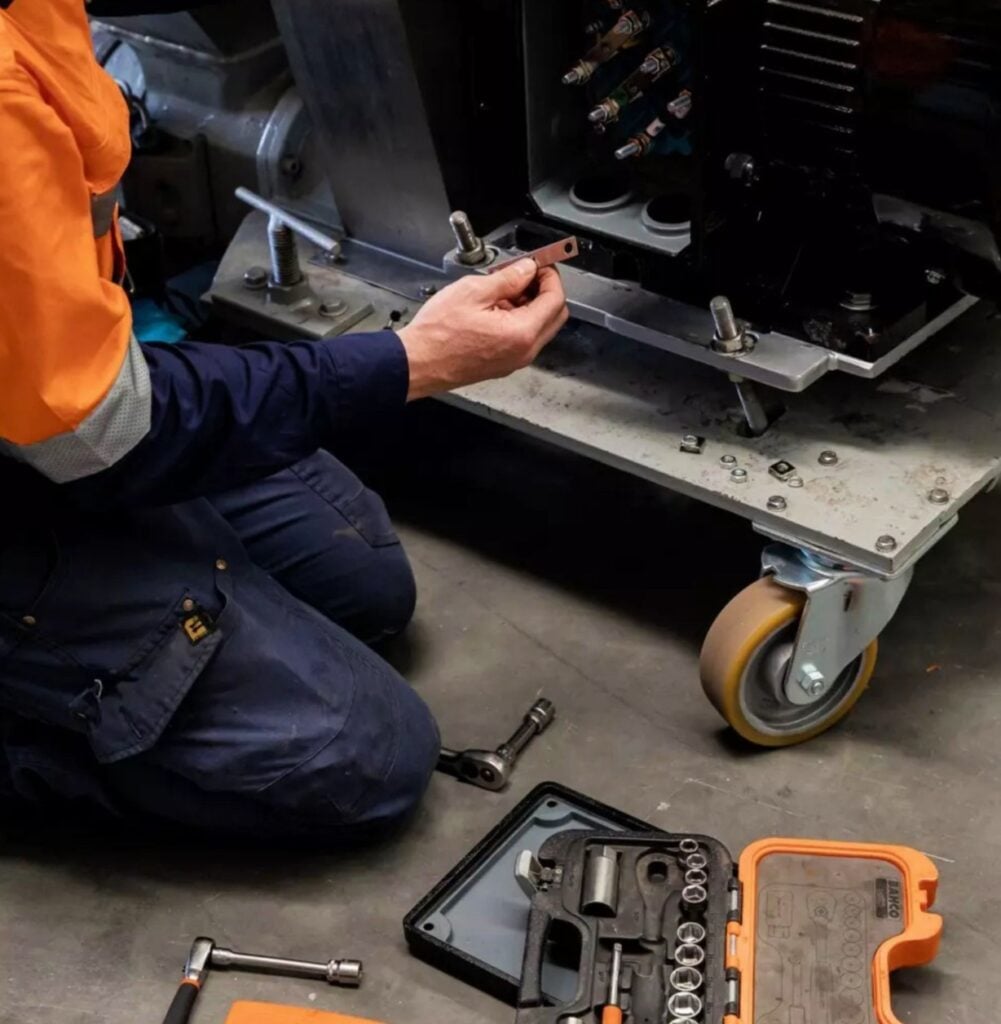
Consistently reducing downtime and cutting maintenance costs requires a structured approach to using machine failure data. But when your team is equipped with leading CMMS software, they can drive positive maintenance change in 4 simple steps.
4 Steps to Use Machine Failure Data for Preventive and Predictive Maintenance
| Steps | What to Do | How LLumin Helps | Results |
|---|---|---|---|
| Centralize and clean data | Bring maintenance records into one system and standardize data labelling | Provides a single source of truth that helps technicians record data correctly | Creates a simple, easy-to-understand data set that makes trends easier to spot |
| Identify failure patterns | Analyze failure events to see what problems cause the most breakdowns | Uses AI and ML algorithms to reveal hidden failure patterns | Lets your team focus on failures that drive the highest downtime and costs |
| Map root causes | Investigate underlying reasons why those failures occur to optimize maintenance | Connects failure records to asset histories for easy analysis | Ensures you treat the cause rather than the symptom to eliminate failures |
| Set up alerts | Set condition thresholds that trigger automated maintenance alerts when breached | Automatically sends alerts and work order to technicians when maintenance is needed | Reduces the chance of unexpected breakdowns and lets you solve problems early |
Step 1: Centralize and Clean Your Data
CMMS software brings your work order histories, repair logs, downtime records, condition data, and a huge range of other vital information into one system. That means you can review each failure in a single place with its full maintenance context.
But you also need to standardize your:
- Asset naming conventions
- Failure codes
- Downtime categories
- Technician notes
This ensures the same issue isn’t recorded in different ways across teams or sites, so your system can more easily spot patterns more reliably.
Once you collect enough clean, high-quality machine failure data, you can use your CMMS to make maintenance decisions based on concrete evidence. And it becomes much easier to see how your new strategies affect performance.
Step 2: Identify Recurring Failure Patterns
After you’ve clearly organized and labelled your data, you’ll be able to review machine failure frequency based on asset, component, failure mode, production line, and location.
This lets you see where the same problems keep occurring and target the problems most likely to cause future breakdowns.
But don’t make the mistake of treating every failure as equal. Instead, it’s important to focus on repeated issues that create the highest downtime, repair costs, or operational disruption.
That way, you can use CMMS software to reduce equipment failure rates and eliminate recurring problems that prevent you from reaching your production potential.
Step 3: Map the Root Causes
Highlighting failure patterns is essential to investigating what’s actually causing the problem.
A critical asset might keep failing because of worn bearings. But that’s only the visible problem.
It might be that poor lubrication, misaligned parts, excessive load, or strong vibrations are causing those bearings to wear out early in the first place. So rather than constantly addressing the symptoms, CMMS root cause analysis empowers you to solve the problem at its source.
LLumin CMMS+ also lets you attach maintenance SOPs, equipment manuals, documents, images, and links to every master record for any machine or asset. Your technicians can then use these to find relevant maintenance information quickly and follow a standard process for equipment care.
These functions ensure your team follows through with any changes to your maintenance strategy and better coordinate planned and reactive maintenance.
Step 4: Set Up Condition-Based Thresholds and Alerts
Measurable warning signs like rising temperature or increased pressure usually occur before machine failure.
By reviewing your historical sensor data, you can see which conditions signal an incoming breakdown.
With LLumin’s customizable rules-based alerts, you can set condition thresholds based on historical failure patterns. Then, when a condition crosses that threshold, LLumin sends an automated alert to a suitable technician.
This lets you carry out just-in-time preventive maintenance based on real-time equipment status rather than relying exclusively on calendar or usage-based maintenance.
The more machine failure data LLumin collects, the more accurate your condition thresholds become. So with each month that passes, you can more effectively optimize your maintenance schedule.
Avoid Costly Breakdowns with LLumin’s Machine Failure Analysis Tools
Historical machine failure data contains valuable insights that can enhance your business–if you have the tools to uncover them.
LLumin CMMS+ gives your team an easy-to-use maintenance management platform that uses powerful AI algorithms to instantly spot patterns in your data. That means you can develop effective preventive and predictive maintenance strategies that solve breakdowns risks cause asset failures.
Book your free personalized demo today to find out how LLumin CMMS+ can reduce your downtime and extend machine lifespans by up to 35%.
Machine Failure Frequently Asked Questions
What Types of Machine Failure Data are Best for Predicting Future Breakdowns?
The best types of machine failure data for predictive maintenance include:
- Failure history to see which problems occur repeatedly and determine whether they caused the breakdown
- Work order records showing how often failures occur, their severity, what repairs were carried out, and whether they successfully resolved the problem
- Condition monitoring data that reveals which thresholds were crossed before the asset failed
- Downtime records to help teams understand which failures have the greatest impact on production
- Inspection reports that reveal early signs of wear or other issues that could lead to machine failure
Analyzing this data in LLumin CMMS+ makes it easy to create preventive and predictive maintenance strategies that reduce asset failure frequency.
How Much Machine Failure Data Do I Need for Trends to Become Reliable?
It depends on the asset.
Several months of maintenance history might be enough for assets that fail frequently. Thankfully, that gives you plenty of information to start making improvements.
But assets that last a long time without needing repairs might need years of historical data to identify meaningful patterns. On the other hand, they won’t be taking up a lot of your time and resources.
The most important thing is to consistently collect clearly labelled records. That way, you can spot trends much faster when they start to emerge. And your predictive strategies will be much more accurate as you continue to build a strong catalog of data.
What’s the Difference Between a Recurring Failure and a Root Cause?
A recurring failure is a problem that keeps happening, like a bearing that fails every few months. You can think of recurring failures as symptoms.
But a root cause is the underlying reason why that failure keeps occurring. For our failed bearing, that might be poor lubrication, excessive load, or misaligned parts.
Replacing a failed component fixes the symptom. But it doesn’t address the root cause.
Instead, long-term improvements depend on using clear historical data to identify and eliminate machine failure causes in the first place.
How Can I Use Machine Failure Data to Improve Maintenance Alert Thresholds?
Start by reviewing data from previous breakdowns to see which conditions changed before the failure occurred. Then, LLumin’s AI data analysis tools to see if these changes are consistent across multiple failures.
Once you know which warning signs indicate an upcoming breakdown, set condition monitoring thresholds that let your team service the machine before it breaks.
Overservicing a machine can be just as problematic as waiting for it to fail. So use your CMMS to refine those thresholds as you gather additional failure and condition data.
How Does LLumin Support Preventive and Predictive Maintenance?
LLumin CMMS+ supports effective preventive and predictive maintenance strategies by helping your team:
- Centralize maintenance data: Bringing maintenance data into one system makes it much easier to track asset performance and sport signs of failure
- Identify developing risks: AI-powered analytics uncover recurring failure patterns before they become obvious to the human eye
- Monitor asset conditions: Real-time performance data highlight signs of asset deterioration early, giving your team more time to respond
- Trigger maintenance action: Automated workflows streamline inspections, corrective action, and escalation rather than allow tasks to get lost
- Continuously improve performance: Ongoing analysis shows which strategies reduce failures most effectively, so you can make decisions based on facts

Ed Garibian, founder, and CEO of LLumin Inc., is an experienced executive and entrepreneur with demonstrated success building award-winning, growth-focused software companies. He has an impressive track record with enterprise software and entrepreneurship and is an innovator in machine maintenance, asset management, and IoT technologies.