
Pass OSHA and ISO Audits with Confidence Using LLumin CMMS+
Compliance audits shouldn’t be a cause for panic, but the reality is noticeably different. Audit notifications often spark weeks of scrambling through filing cabinets, compiling spreadsheets, and hoping critical documentation hasn’t disappeared. 85% of companies report that compliance has become more complex in the past three years, with documentation gaps across several categories creating the most frequent violations during enforcement reviews.
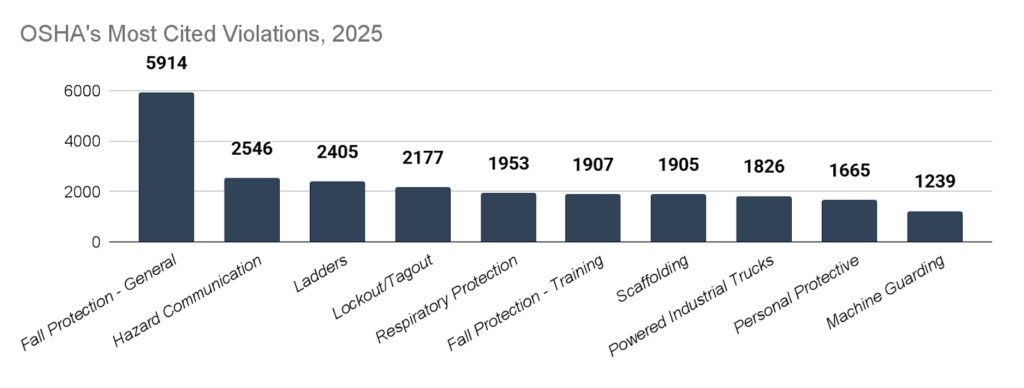
For maintenance and operations leaders preparing for OSHA safety inspections or ISO certification audits, scattered records and inconsistent processes create unnecessary risk, transforming routine compliance checks into operational nightmares.
We’ve created the following article with exactly that in mind. It examines how CMMS compliance audit readiness transforms scattered documentation into verified evidence through digital compliance documentation, asset inspection recordkeeping, and the preparation for operational audit capabilities that keep facilities audit-ready year-round.
How Maintenance Compliance Software Helps You Prepare for an Operational Audit
Whether or not you use a CMMS, compliance audits require:
- Structured processes
- Accurate documentation
- Full traceability across maintenance and safety activities
As much as they don’t like to admit it, many facilities can’t readily produce these elements when auditors arrive. 60% of ISO 9001 nonconformities identified during system audits stem from documentation issues that a CMMS can easily solve, such as:
| Audit Requirement | Paper-Based Systems | CMMS Digital Documentation |
|---|---|---|
| Work Order Histories | Incomplete logs, missing dates | Complete timestamped digital records |
| Equipment Inspection Proof | Filed and forgotten | Searchable database with photos |
| Corrective Action Verification | Spreadsheet tracking, delays | Automated status tracking |
| Preventive Maintenance Evidence | Variable documentation quality | Standardized digital checklists |
A comprehensive maintenance management platform provides a central source of truth for inspections, corrective actions, and asset histories that auditors expect to review. This centralized approach enables teams to access verified regulatory compliance data instantly, eliminating the last-minute scramble for paperwork that delays audits and undermines credibility.
Why Compliance Audits Can Be a Serious Obstacle
Digital records spread across unconnected systems make it difficult to produce accurate audit-ready maintenance records during audits when time pressures are highest. Incomplete logs or inconsistent data entry create avoidable findings and slow down the review process, extending what should be routine verifications into multi-day investigations. Organizations report 48% improvement in reporting quality when using automated compliance systems that generate standardized outputs.
| Documentation Challenge | Impact on Audit | Frequency |
|---|---|---|
| Missing Inspection Records | Cannot prove compliance with standards | Common across facilities |
| Illegible Handwritten Notes | Auditors cannot verify work completion | Daily occurrence with paper systems |
| Incomplete Work Orders | 45% of maintenance time spent finding documents | Leading cause of audit delays |
| Version Control Issues | Outdated procedures followed unknowingly | Frequent in multi-site operations |
Modern platforms remove these issues through centralized data capture, consistent recordkeeping, and complete historical visibility that survives personnel turnover. An integrated system transforms operational transparency from an aspiration into a daily reality through maintenance record integrity that withstands the most thorough auditor scrutiny.
Make audit preparation effortless, not endless
When compliance records live in one system with complete traceability, auditors can quickly locate what they need, and the number of findings remains minimal. LLumin CMMS+ provides you with audit-ready documentation and real-time compliance visibility, transforming preparation from panic into confidence.
5 Ways CMMS Compliance Audits Are More Streamlined
1) CMMS Keeps Maintenance and Inspection Records Accurate and Accessible
Auditors expect clear evidence that tasks were completed on time and as required, which paper documentation systems rarely provide consistently. Digital work orders and checklists, on the other hand, ensure every action is documented with the standardization that satisfies inspector requirements without additional compilation effort.
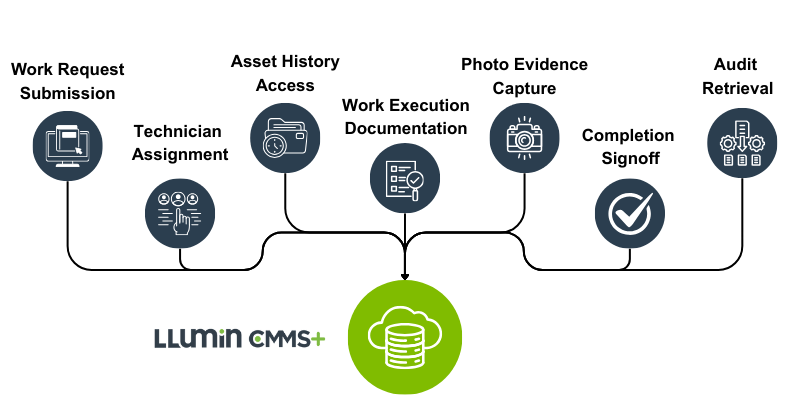
Comprehensive CMMS platforms store complete, timestamped histories for every asset, ready for audit review through asset inspection recordkeeping that creates permanent evidence. This asset compliance tracking eliminates the credibility issues that arise when auditors cannot verify that documented work actually occurred when claimed.
2) CMMS Schedules and Tracks Inspections with Zero Gaps
Missed inspections and overdue tasks are common sources of non-compliance that create immediate findings during audits. A recent study found that approximately 74% of organizations struggle to properly address vulnerabilities due to limited budgets and resources, making automated tracking essential for maintaining continuous compliance without increasing headcount.
| Scheduling Challenge | Without Automation | With Inspection |
|---|---|---|
| Overdue Inspections | Discovered during audits | Prevented through automated alerts |
| Task Assignment Clarity | Unclear ownership, delays | Automatic assignment with notifications |
| Compliance Calendar Management | Manual tracking, errors | System-generated compliance calendars |
| Escalation for Missed Tasks | No systematic follow-up | Automatic escalation rules |
Automated reminders and escalation workflows ensure deadlines are met without manual oversight that consumes management bandwidth. Modern platforms make inspection scheduling visible to all teams, reducing risk across the organization through automated compliance workflows that function independently of individual initiative or memory.
Never Miss Another Compliance Deadline
When inspections fall through the cracks, audit findings follow. LLumin CMMS+ eliminates scheduling gaps with automated reminders, escalation workflows, and team-wide visibility that keeps every compliance task on track—no manual follow-up required.
3) CMMS Centralizes Safety and Compliance Documentation
Policies, SOPs, training records, and certifications must be easy to retrieve during an audit when auditors request immediate access. Digital storage ensures documents stay current and version-controlled, eliminating the confusion that occurs when multiple versions circulate across departments. 82% of organizations plan to invest more in technology to drive compliance activities, recognizing that manual processes cannot scale with increasing regulatory complexity.
| Documentation Need | File Cabinet Approach | Centralized Digital System |
|---|---|---|
| Policy Access | Time-consuming searches | Instant search and retrieval |
| Training Record Verification | Manual compilation required | Automated certification tracking |
| SOP Version Control | Multiple versions in circulation | Single authoritative source |
| Document Retention Compliance | Manual purging, retention errors | Automated retention and disposal |
Advanced systems provide secure, searchable access to all compliance documents in one system through safety documentation access that serves both daily operations and audit responses. This centralization supports quality assurance records that demonstrate continuous attention to regulatory requirements rather than last-minute scrambling before inspections.
4) CMMS Demonstrates Preventive Maintenance as Part of Compliance
Regulators often look for evidence of proactive care, not just reactive fixes that indicate minimal compliance effort. Accurate PM records show due diligence and ongoing risk reduction processes that satisfy auditor expectations for responsible asset management. Organizations implementing comprehensive documentation frameworks achieve an 82% reduction in unplanned downtime through systems that maintain consistent records.
| PM Evidence Type | Auditor Expectation | CMMS Capability |
|---|---|---|
| Scheduled Task Completion | Proof of timely execution | Complete history with dates |
| PM Effectiveness | Declining failure rates | Trend analysis and reporting |
| Resource Allocation | Appropriate technician skills | Task assignment records |
| Continuous Improvement | Adjustment based on results | Documentation of PM refinements |
Modern platforms link PM completion rates to compliance dashboards, supporting continuous improvement through preventive maintenance evidence that demonstrates strategic asset management. This connection between maintenance activity and compliance outcomes transforms preventive maintenance from a cost center into documented proof of operational responsibility.
5) CMMS Instantly Produces Audit-Ready Reports
Compiling audit documentation manually wastes days or weeks that maintenance teams should spend on productive work. 40% of compliance teams still run processes with basic tools like spreadsheets, creating enormous inefficiency when preparing for audits. Automated reporting provides clean, consistent summaries with no manual formatting required.
| Report Type | Manual Compilation | Automated CMMS Generation |
|---|---|---|
| Asset Inspection Summaries | Days to compile across sites | Instant export by asset class |
| Corrective Action Status | Spreadsheet updates required | Real-time completion tracking |
| Training Record Verification | Contact HR, compile lists | Automated certification reports |
| Compliance Performance Trends | Manual analysis required | Built-in dashboards and analytics |
Sophisticated platforms generate exportable audit reports that fit regulatory expectations through compliance reporting tools that present evidence professionally. These pre-formatted outputs ensure auditors receive information in the format they require, accelerating reviews and demonstrating organizational sophistication.
LLumin CMMS+ Builds Confidence Before Every Audit
LLumin provides leaders with clarity on what’s complete, what’s overdue, and what still needs verification through maintenance compliance software that operates continuously. Clear dashboards reduce uncertainty and make it easy to demonstrate compliance during walk-throughs without last-minute preparation panic. Organizations report 48% improvement in reporting quality when using automated compliance systems versus manual preparation methods.
| Audit Readiness Element | Without CMMS | With LLumin CMMS+ |
|---|---|---|
| Documentation Completeness | Unknown until auditors ask | Real-time compliance dashboards |
| Evidence Organization | Days of preparation required | Instant report generation |
| Historical Verification | Search multiple systems | Single source of truth |
| Corrective Action Proof | Manual status updates | Automated tracking with photos |
The platform equips organizations with real-time accuracy, full audit trails, and reliable documentation that survives the most demanding inspections. Through integrated data accuracy for audits and traceable work orders, LLumin transforms audit preparation from a periodic crisis into continuous readiness that supports both operational excellence and regulatory compliance.
LLumin: Compliance You Can Prove, Preparation You Can Trust
Even with a CMMS, compliance audits depend on accurate records, consistent processes, and transparent reporting across the organization. These are capabilities that manual systems cannot deliver reliably. LLumin CMMS+ provides everything teams need to maintain compliance, prove asset reliability documentation, and enter audits with total confidence through risk reduction processes that address potential issues before they become findings.
Book a demo to see how LLumin CMMS+ streamlines compliance tasks and makes audit preparation effortless through maintenance compliance software designed specifically for the demands of modern regulatory environments.
Frequently Asked Questions
What compliance challenges can a CMMS resolve?
A CMMS resolves documentation fragmentation, inspection scheduling gaps, corrective action tracking delays, and audit preparation inefficiency. 85% of companies report that compliance has become more complex in the past three years, making centralized systems essential. LLumin CMMS+ addresses these challenges through automated workflows, digital recordkeeping, and instant reporting capabilities that maintain continuous audit readiness.
How does LLumin CMMS+ support documentation for audits?
LLumin CMMS+ maintains complete, timestamped records of all maintenance activities, inspections, corrective actions, and training certifications in one centralized system. Organizations report 48% improvement in reporting quality when using automated compliance systems. The platform generates pre-formatted audit reports organized by regulatory requirement, eliminating manual compilation while ensuring auditors receive professional documentation that satisfies their verification needs.
Can a CMMS track inspections and corrective actions automatically?
LLumin CMMS+ provides comprehensive automation for inspection scheduling, task assignment, completion tracking, and corrective action management. The system sends automated reminders to prevent overdue tasks, routes work orders based on expertise, tracks remediation progress with photo evidence, and maintains permanent records. 60% of ISO 9001 nonconformities stem from documentation issues, which automated tracking addresses through consistent and complete evidence collection.
How accurate does audit data need to be to avoid findings?
Audit data must be complete, consistent, and verifiable to avoid findings during inspections. Minor inconsistencies can escalate into major observations when auditors cannot verify that documented work actually occurred. 45% of a maintenance professional’s time is spent retrieving documents in manual systems, time that should be spent ensuring accuracy. LLumin CMMS+ ensures data accuracy through mandatory fields, automated timestamps, and integrated photo capture that creates irrefutable evidence.
What features make LLumin CMMS+ valuable during regulatory reviews?
LLumin CMMS+ provides instant access to complete asset histories, automated compliance dashboards showing current status, pre-formatted reports organized by regulatory standard, centralized document management with version control, and real-time corrective action tracking. Organizations with comprehensive documentation systems experience smoother audits with fewer findings. These features transform regulatory reviews from adversarial examinations into collaborative verifications of documented operational excellence.
